"You're still nothing but two-bit outlaws on the dodge. It's over, don't you get that? Your times is over and you're gonna die bloody, and all you can do is choose where."
"Wherever the hell Bolivia is, that's where we're off to."

Butch Cassidy and the Sundance Kid starts with a short silent film describing the exploits of its protagonists. Right from the start, it lets you know they're all dead now, something which should seem obvious, and might detach the audience from the film, if not for the pitch-perfect performances delivered by Paul Newman and Robert Redford in the titular roles. When you watch these two banter, it brings the long-dead historical figures to life, and might even allow you to forget their inevitable fates until the film reminds us of those dark clouds on the horizon.
The first five minutes of BCatSK are filmed in sepia tones, almost as a way of "introducing" us to this historical period. Once the more naturalistic color bleeds in, we are fully immersed in this world, along for the ride with these likable, entertaining characters. And indeed, we allow ourselves to be entertained by them for what feels like a very short time before that theme of inevitability sets in. Butch and Sundance rob a train, when suddenly a second train approaches on the tracks. It opens up and a posse rides out. From that moment on, our protagonists are on the run. A good 20 minutes of screentime is dedicated to them desperately fleeing their seemingly unstoppable pursuers. Multiple times, after seemingly losing their tail only to pick it back up again, Butch and Sundance ask "who are those guys?" We do get an answer to that question, but that question is missing the point. Cassidy said something much more relevant the moment he first saw the posse: "Whatever they're selling, I don't want it." The real question is, what is that posse selling? The answer is, the same as the comic relief bicycle salesman from earlier in the film: the future. This posse doesn't cause the physical death of Butch or Sundance, but it is their downfall.

The bicycle is a handy little visual metaphor for this idea of the inevitable current of time. A sheriff tries to rally up an old-fashioned posse to go after the outlaws, but is overshadowed by a man selling this handy new transportation method, repeatedly insisting that it represents the future. Butch Cassidy, amused by this spectacle, buys one, enjoying the rewards of technological and societal progress. But what he ignores is that, as an outlaw, he is not a part of that society, and it will eventually reject him. Indeed, while the bicycle is replacing the horse, a new kind of posse is replacing the old-fashioned, easily avoidable one proposed by the sheriff: the owner of a corporation decides he's fed up with being robbed, and assembles a team of the best trackers and lawmen across state lines. Butch and Sundance both seem perplexed by the idea that these lawmen might leave their respective states - they're used to a posse assembled in one night, comprised of novice militiamen from a single town. Once they've narrowly avoided this super-posse and decided to leave the country with Sundance's girlfriend Etta Place, Butch Cassidy discards his new bicycle, realizing he wants no part of this new world. The camera holds on the spinning wheel on the ground, and we return to sepia. This wheel could represent either the unstoppable wheel of time, or Butch and Sundance's wheels spinning to a stop. The good times are behind them now. They're on the run, as much as they might tell themselves they're going to Bolivia by choice.
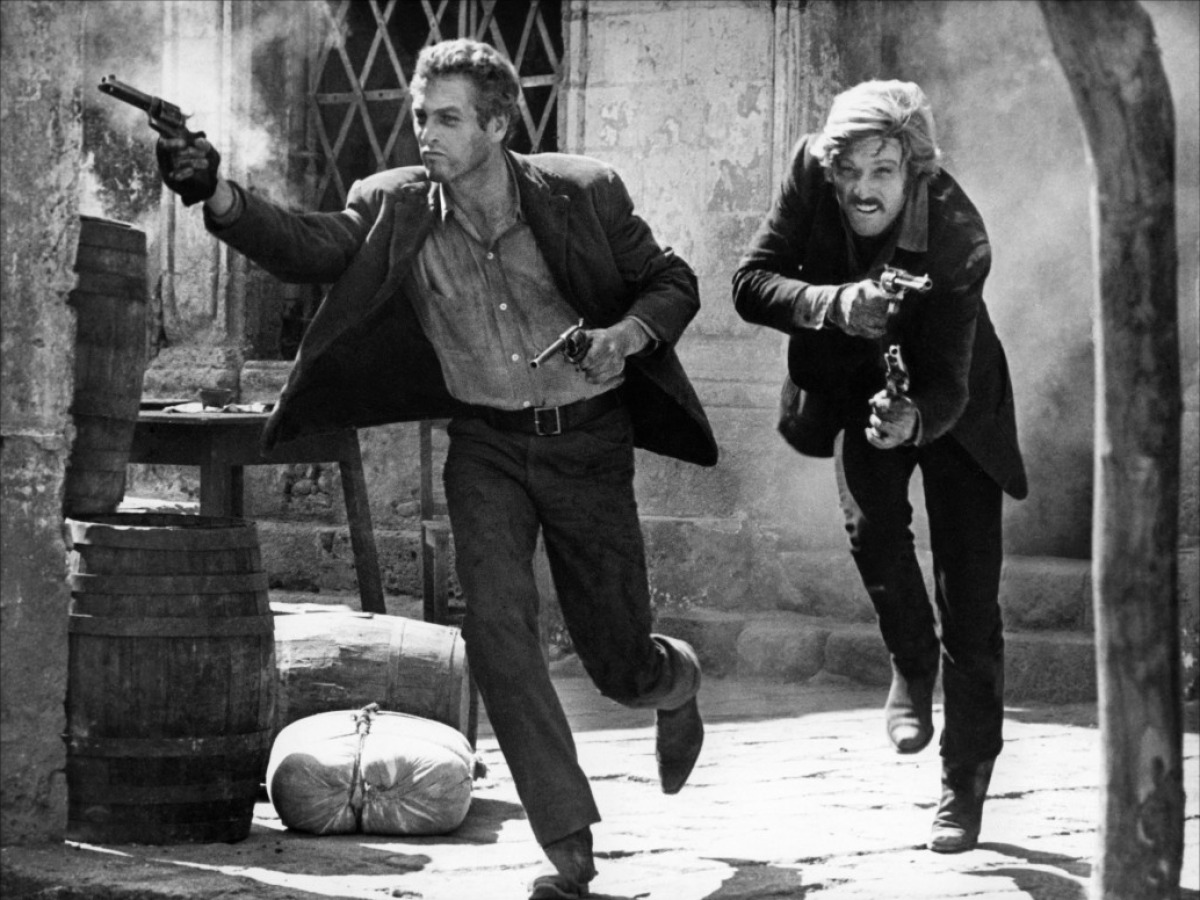
And of course, Bolivia is where they die. The final act of this movie is a depiction of two once-great men getting swept aside by time, trying desperately to cling to their former ways. Right near the end we see them at a complete 180 from the Butch and Sundance we've known: rather than two charming outlaws using their wits to avoid violence and escape tricky situations, we see two men gone straight, committing a brutal act of violence to get their money back. Etta leaves them. In their final scenes before the climactic shootout, their carefree rapport is all but gone. They're two tired, stressed and disgruntled men who don't know what they want anymore. Then the entire Bolivian army arrives and kills them. In their final moments, they do retain some dignity, and find the spark of what used to drive them now that they have a motive, as desperate and hopeless as it may be. They charge outside and, in an iconic moment, the camera freezes on them, in presumably the final moment we get to see them alive. That sepia returns as we hear, but don't see, the hail of gunfire that cuts them down. Time continues on without them, but we have been fortunate enough to see Butch Cassidy and the Sundance Kid frozen and preserved for our enjoyment.
"I won't watch you die. I'll miss that scene if you don't mind."
Works Cited:
Butch Cassidy and the Sundance Kid. Dir. George Roy Hill. Perf. Paul Newman, Robert Redford, Katharine Ross. Twentieth Century-Fox Films, 1969.


